Your small business website needs a redesign if it gets visitors but no enquiries, is awkward to use on a phone, or never gets updated because changes are too slow or too hard. Those three signs matter more than how old it looks. If the problem is a slow page, a broken form or out of date prices, you probably need a fix, not a new site, and this guide shows you how to tell the difference.
We build and rebuild small business websites at Marketing Handled. Our clearest example is a Leeds heating firm whose website went from zero enquiries to 16 in the first month after its redesign, and brought in 44 in October 2026. More on that below.
The 5 minute website health check
Before reading the signs, run these quick checks. Each one takes a minute and tells you something real.
| Check | How | Warning sign |
|---|---|---|
| Enquiries | Count calls, forms and emails that came from the website last month | Visits but almost no enquiries |
| Phone test | Open your site on your phone and try to call you in one tap | Pinching, zooming or hunting for the number |
| Google test | Search your main service plus your town | You aren't on the first page or two |
| Speed | Run your homepage through PageSpeed Insights | Largest Contentful Paint over 2.5 seconds on mobile |
| Accuracy | Read your services, prices and opening hours | Anything wrong, or no change in a year |
Google treats a Largest Contentful Paint of 2.5 seconds or less as good, according to Google's Core Web Vitals guidance. One or two failed checks usually means a fix. Three or more usually means a rebuild.
The 7 signs you need a new website
1. People visit but nobody gets in touch
This is the sign that matters most. If Search Console or your analytics show visits but your phone and inbox stay quiet, the site is losing people somewhere between landing and contacting you.
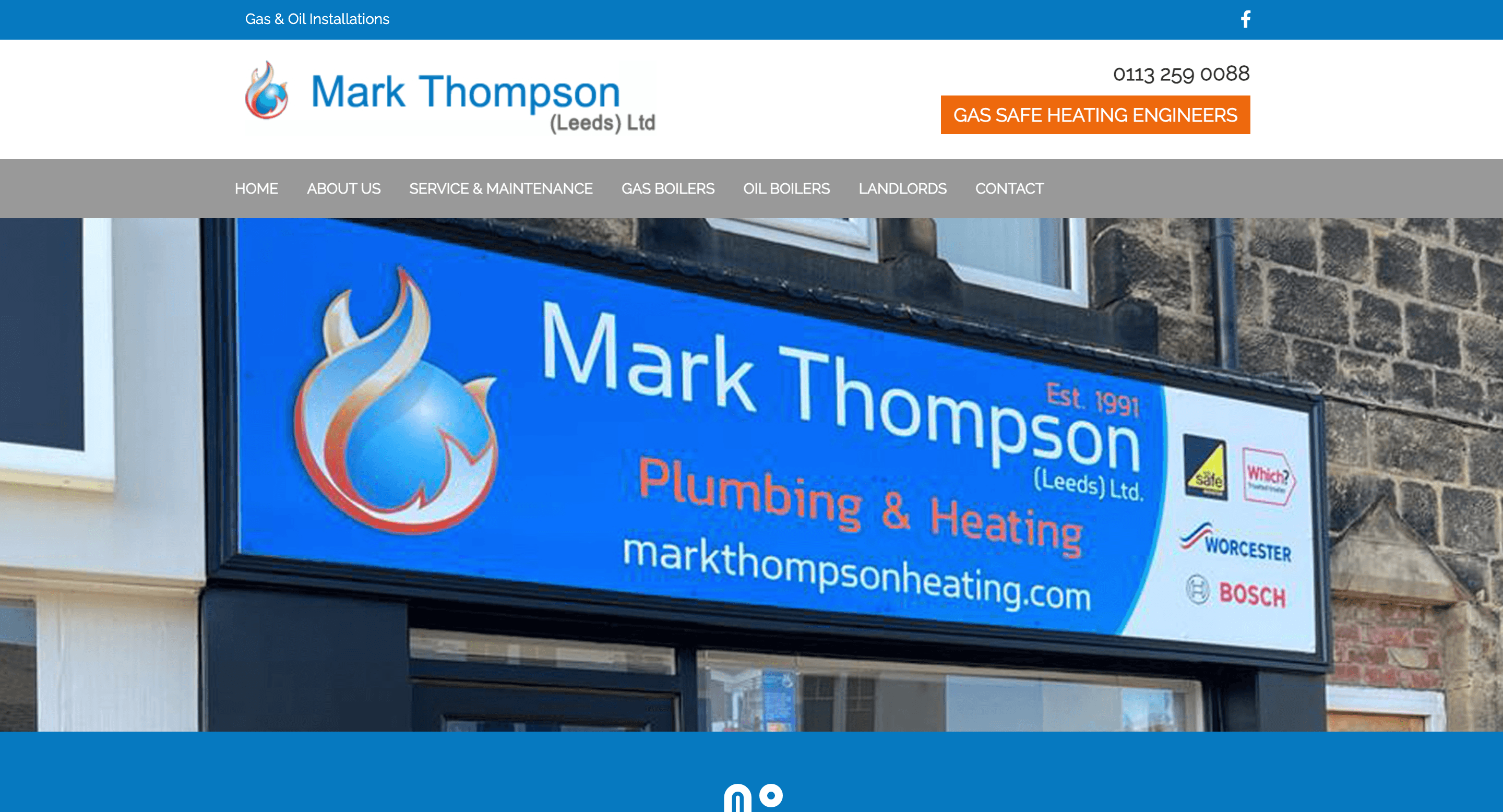
Mark Thompson (Leeds) Ltd had exactly this problem. A family run heating and plumbing firm with over 30 years of trading and a 5.0 rating on Which? Trusted Traders, and their old website produced zero enquiries.
If visitors land but don't get in touch, start with the first screen they see. Run your site against a 10 point homepage checklist before deciding anything else.
2. It's hard to use on a phone
Most people looking for a local business are on their phone. If they have to pinch, zoom or hunt for your number, they go back to Google and pick the next result. Google also ranks sites based on their mobile version (Google Search Central explains mobile first indexing here), so a poor phone experience costs you rankings as well as customers.
3. Nobody keeps it up to date
If changing an opening time or adding an event means chasing someone and waiting a week, the site goes stale, and a stale site makes visitors wonder whether the business is still trading. There are two good fixes, and the right one depends on how you like to work:
- Update it yourself. Horsforth Harriers, one of North Leeds' biggest running clubs, wanted the committee to post events without waiting on anyone. We built them a self managed site with a simple editor: "Our new self managed website looks fantastic and is so easy for us to update with upcoming events!" (Louise Bisset).
- Have it updated for you. Plenty of business owners would rather not learn a website editor at all. On our monthly website plans, you send us the change (new prices, photos or services) and we make it for you.
What doesn't work is a site that nobody can, or will, change.
4. All your services are crammed onto one page
When every service sits on one page, Google has no specific page to rank for "boiler installation Leeds" or "bathroom plumber Horsforth". Each main service needs its own page with its own title, description and proof. Our landing page design tips show what each one should include.
5. Your best proof is buried
Reviews, accreditations and finished work should sit near the top of the page and beside your contact button. If a visitor has to scroll to the footer to find out you're rated 5.0, most never see it.
6. It doesn't look like the business you are now
You've added services, moved area or changed prices, and the site still describes the business you were five years ago. Copy that doesn't match what you actually do sends people to a competitor. The same goes for your brand: if you've had a new logo, an old site with the old one looks careless.
7. It isn't showing up on Google
If you search for your main service and your town and can't find yourself in the first few pages, the problem is usually structural: missing page titles, no sitemap, one page trying to rank for everything. A redesign is the right time to fix this, because the structure is being rebuilt anyway.
CC Coaching Ltd, an executive coaching business we built a website for, is a good example of what fixing the structure does. From May to September 2026 the site had 3,700 Google impressions, over five times as many a month as in the four months before, and it now shows for searches like executive coaching, leadership coaching and coaching services.
What a redesign actually changed: Mark Thompson (Leeds) Ltd
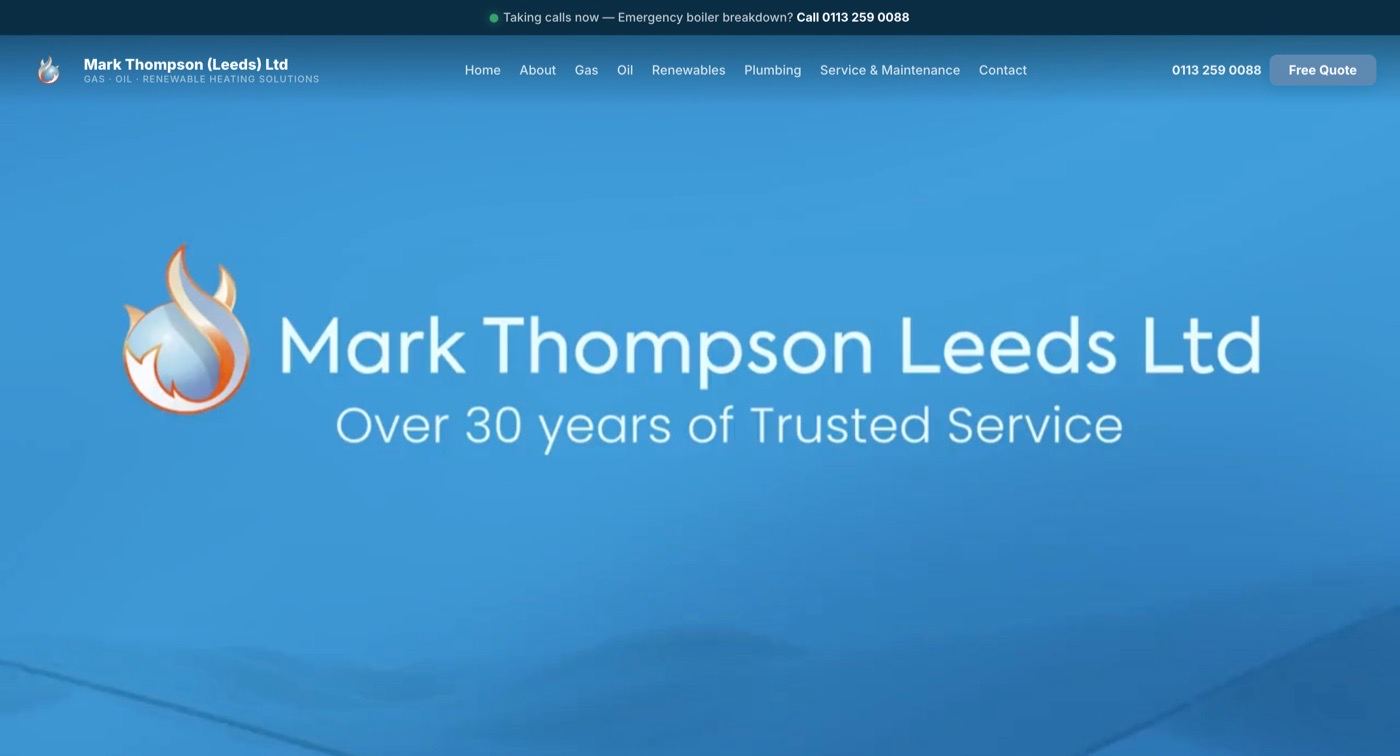
We rebuilt Mark Thompson's website around the signs above:
- a dedicated page for each service (gas and oil boilers, renewables, plumbing, servicing)
- recent projects, reviews and the Which? Trusted Traders rating shown up front
- sticky "Call Now" and "Free Quote" buttons on mobile, so the next step is always one tap away
- technical SEO built in from the start, so every service page could rank on its own
| Before | After | |
|---|---|---|
| Website enquiries | 0 | 16 in month one, 44 in October 2026 |
| Google impressions, June to September 2026 | no figure on record | 93,500 |
| Clicks from Google search, June to September 2026 | no figure on record | 739, with 217 in September alone |
| First page of Google for | no figure on record | boiler service Leeds, boiler repair Leeds, gas engineer Leeds |
| Service pages | none | one per service |
Clicks from Google have grown every month since launch. "Alex created a new website for us at Mark Thompson (Leeds) Ltd. It has generated lots of additional work for us and we couldn't be happier." Mark Thompson
If your site is showing several of these signs, our small business website design service covers the full rebuild, with no setup fee on monthly plans.
3 signs that don't mean you need a redesign
A new site isn't always the answer. These are usually quick fixes:
- It's a bit slow. Oversized images cause most slow small business sites. Compressing them often brings load time under that 2.5 second mark without touching the design.
- Some details are out of date. New prices, a new phone number or changed opening hours are an edit, not a rebuild. Our monthly website maintenance checklist covers what to check.
- You just don't like the colours. If enquiries are coming in, a fresh look on its own won't add more. Change what's costing you customers first.
The test is simple: if the site works on a phone, gets you enquiries and you can keep it accurate, keep it and improve it. If it fails two or more of the seven signs, a rebuild usually costs less than patching it again and again.
Signs a website needs rebuilding rather than redesigning
A redesign changes how the site looks; a rebuild changes how it's put together. You need a rebuild when the problem is underneath the design: the site doesn't work properly on a phone, every service is crammed onto one page, or nobody can update it because of the platform it's built on. A new colour scheme fixes none of those, which is why Mark Thompson's site needed new service pages and mobile call buttons rather than a fresh coat of paint.
- Redesign is enough if the site works on phones, has a page per service and you can edit it, but it looks dated or off brand.
- Rebuild if you'd need to add a page structure, fix the mobile layout or change platform to get it working.
Redesign or refresh? A quick guide
| What you're seeing | Usually needs |
|---|---|
| Slow pages, but enquiries are fine | A fix: compress images, check hosting |
| Wrong prices, hours or phone number | A fix: content update |
| Broken contact form | A fix, today |
| Hard to use on a phone | A redesign |
| All services on one page, not found on Google | A redesign with a page per service |
| Visits but no enquiries | A redesign around calls to action and proof |
| Nobody can update it | A redesign on a platform you or your provider can edit |
How much does a website redesign cost?
For a small business, a redesign costs about the same as a new build, because the structure is rebuilt properly rather than reskinned. UK market prices for a professionally built small business site typically run from £1,000 to £5,000. We quote every site individually, as a one off build or a monthly plan:
| Website | Live in |
|---|---|
| Single page | 1 to 2 weeks |
| Professional (multi page) | 2 to 4 weeks |
| Ecommerce | 2 to 4 weeks |
Monthly plans have no setup fee and a 12 month minimum term, then roll monthly, and include hosting, maintenance and technical SEO. One off builds are yours from day one and can add our monthly aftercare. For the full picture, including market prices, hosting and domains, see how much does a website cost for a small business in the UK? and our pay monthly vs one off comparison.
How to redesign without losing your Google rankings
- Export what already ranks. In Search Console, list the pages and searches that get impressions now.
- Keep the domain. Changing it throws away the rankings you've built.
- Map every old address. Keep the same web address for pages that rank, or set up a permanent redirect to the new page that replaces it.
- Carry over your proof. Bring every Google and trade body review, accreditation and project photo across.
- Check email first. A new site shouldn't break your inbox. If your addresses aren't on your own domain yet, see why a professional email address is worth setting up at the same time.
- Submit the new sitemap. After launch, submit it in Search Console and watch for errors over the following weeks.
Google's own guidance on moving a site with URL changes covers redirects in more detail if your web addresses are changing.
Not sure which you need?
Think your site is showing a few of these signs? Book a free 30 minute call and we'll tell you honestly whether it needs a rebuild or just a fix. You'll speak directly to Alex or Ella, and we reply within 1 business day.
FAQs
How do I know if my website needs a redesign?
Check three things: whether visitors turn into enquiries, whether the site is easy to use on a phone, and whether you can keep it up to date. If it fails two or more of those, or the seven signs in this guide, a rebuild usually costs less than patching it again and again.
How often should a small business redesign its website?
There's no fixed schedule. Redesign when the site stops bringing in enquiries, stops working well on phones, or no longer matches what you sell. A well built site that is kept up to date can last many years.
Is it better to redesign or build a new website?
For most small business sites, a proper redesign is a new build: new structure, new service pages, new copy, same domain. Reskinning an old site keeps the problems that stopped it working in the first place.
Will a website redesign affect my Google rankings?
It can, in either direction. Keep your domain, keep or redirect any pages that already rank, and submit your new sitemap in Search Console after launch. Done properly, a redesign with dedicated service pages usually improves rankings.
How long does a website redesign take?
Our single page sites go live in 1 to 2 weeks, and multi page or ecommerce sites in 2 to 4 weeks. Most of that time is gathering your content, photos and reviews.
How much does a website redesign cost?
A proper redesign costs about the same as a new build, because the structure is rebuilt rather than reskinned. UK market prices for a small business site typically run from £1,000 to £5,000; we quote each site individually as a one off build or a monthly plan.