Google Ads is usually better for a small business whose customers already search for what it sells, like a plumber, an accountant or a physio. Facebook and Instagram ads are usually better when people don't search for you yet but would want you if they saw you, like a new café, a handmade product or an event. Many small businesses end up running both: Google to catch people who are ready to buy, and Facebook and Instagram to get seen and to remind people who visited your website.
We run both for small businesses, so here is the honest comparison and a simple way to decide.
Google Ads vs Facebook Ads at a glance
| Google Ads | Facebook & Instagram Ads (Meta) | |
|---|---|---|
| Who sees it | People searching for what you sell | People who match an audience you choose |
| Buyer's mindset | "I need this now" | "I wasn't looking, but that looks good" |
| Ad format | Mostly text, plus Maps listings | Images, video, Reels and Stories |
| How you usually pay | Per click | Per thousand times your ad is shown (impressions) |
| Cost per click | Higher, often £1.50 to £2.50 or more | Usually lower |
| Lead quality | Higher intent, fewer leads | More reach, leads need more nurturing |
| What it needs from you | A clear landing page | Strong photos and video |
| Best for | Services people search for | Products, events, local awareness, offers |
The real difference: intent vs discovery
Google Ads catches demand that already exists. Someone types "boiler repair Leeds" and you appear at the top. They have a problem and they want it fixed today. That intent is why Google clicks cost more, and why they turn into enquiries more often.
We have seen how strong that search demand is for trades. When we rebuilt the website for Mark Thompson (Leeds) Ltd, a heating and plumbing firm, Google search brought in 16 leads in the first month, up from zero, and the firm now gets 25 or more a month. That was through SEO rather than ads, but it shows people in Leeds are searching for exactly that service every day. Google Ads lets you appear for those searches from the day you launch.
Facebook and Instagram ads create demand. Nobody searches for "a new brunch spot in Horsforth" or "a hand poured candle". Meta lets you put a striking image or video in front of people in your area who match your ideal customer, and make them want something they weren't looking for.
Our ad campaigns service covers both, with management from £100 a month, and the free ads review is where we work out which one fits your business before you spend anything.
How each platform charges you
Google Ads charges per click. You set an average daily budget and Google never charges more than 30.4 times that in a month. Our guide to how much Google Ads cost in the UK breaks down typical click prices by industry and how to work out what you can afford.
Meta usually charges for impressions, which means every time your ad is shown, whether or not anyone clicks. You set a daily or total budget for the campaign. Clicks typically work out cheaper than Google, but more of those clicks are people browsing rather than buying, so judge both platforms on the cost of an enquiry or sale, not the cost of a click.
The part nobody mentions: Facebook ads need good creative
On Google, a well written text ad and a clear landing page will do the job. On Facebook and Instagram, your ad sits in a feed next to friends' photos and professional brands. If the image or video doesn't stop the scroll in about a second, it doesn't matter how good the targeting is.
That is where most small businesses struggle. Stock photos look like ads and get scrolled past. Phone photos of a cluttered counter don't sell. What works is real, well shot content of your actual product, place and people.
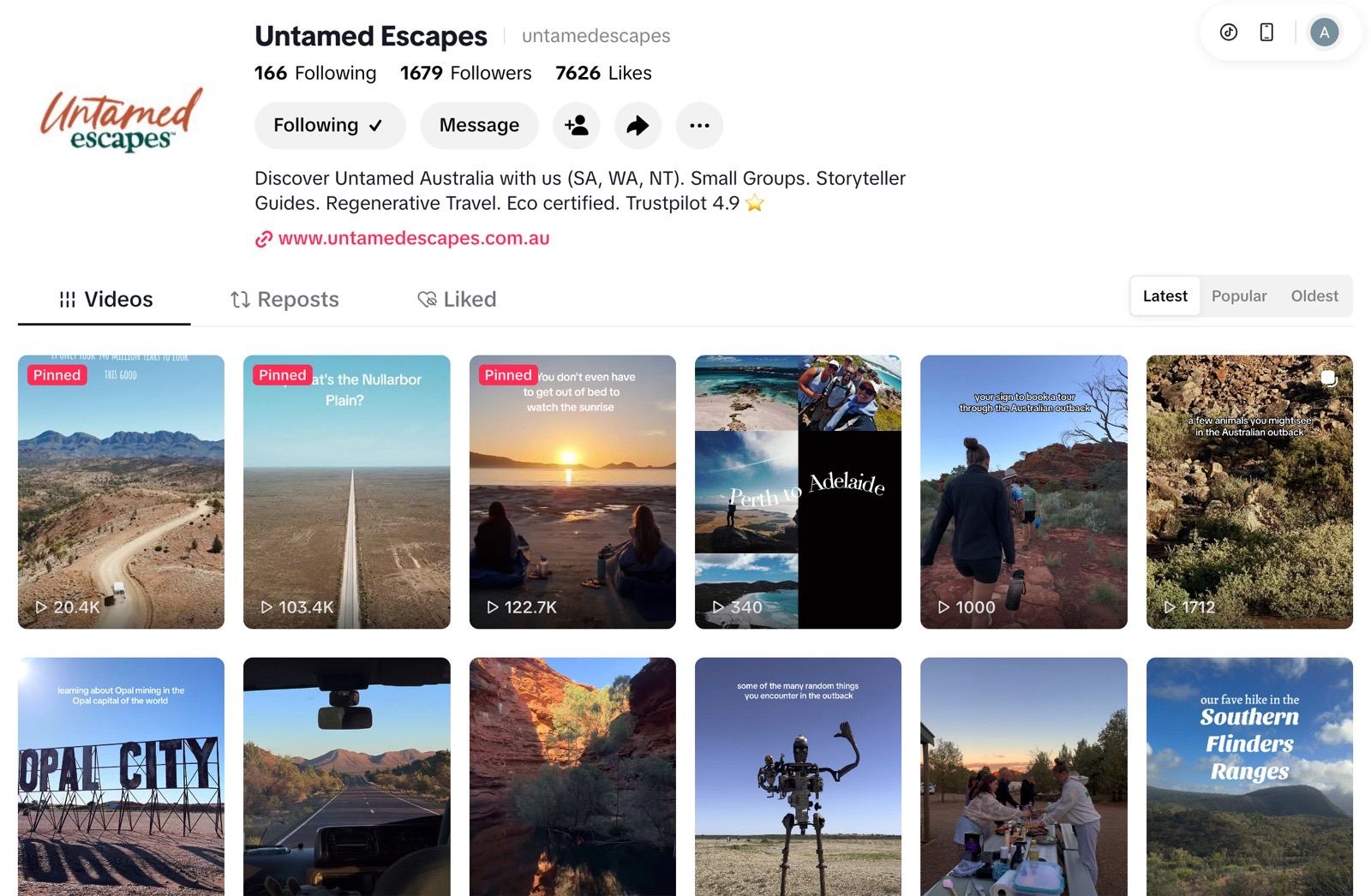
That's the reason we make ad creative ourselves. Ella has filmed content on location for clients like Untamed Escapes, an Australian adventure tour company. Their marketing manager said: "I worked with Ella on an extensive content collaboration project... So great was she to work with that I ended up assigning her as an admin to our TikTok account." Africa Driven said Ella's Instagram content "really captured the essence" of their safari trips. That is the kind of content that works as a Facebook or Instagram ad.
If you don't have that content yet, our business photography can create a bank of images and short videos to run ads from for months.
Which is better for your type of business?
| Your business | Start with | Why |
|---|---|---|
| Trades: plumber, electrician, builder, roofer | Google Ads | People search "[trade] near me" when they need you |
| Professional services: accountant, solicitor, consultant | Google Ads | High value searches; add LinkedIn later for B2B |
| Clinics: physio, dentist, Pilates, beauty | Google first, then Instagram | Search for treatments, Instagram for offers and new classes |
| Café, restaurant, shop | Facebook & Instagram | Nobody searches for you yet; great photos sell |
| Products and ecommerce | Both | Google Shopping and search for buyers, Instagram for discovery |
| Events, launches, open days | Facebook & Instagram | Short deadline, local audience, visual |
| Coaches and personal brands | Facebook & Instagram, then Google | Trust is built through faces and video |
Worked example: £400 a month on each platform
An illustrative example to show how the two platforms behave. Both businesses are made up and every number is an assumption, not a real client's result. Real costs vary with your audience, area and time of year.
A roofer in Leeds puts £400 a month into Google Ads. At around £3 a click, that buys roughly 130 clicks from people searching things like "roof repair Leeds" and "slipped tiles Headingley". If 1 in 12 call or fill in the quote form, that is about 11 enquiries from people with a roof problem right now. The same £400 on Facebook would reach far more people, but almost none of them would have a leaking roof that week.
A café in Horsforth puts £400 a month into Instagram and Facebook ads. Very few people search Google for a new café, so there is little to bid on. Instead the café shows a short video of its brunch menu to people within 3 miles. Assuming about £8 per 1,000 views, £400 buys around 50,000 views, enough to put the café in front of most local Instagram users several times. If 1 in 100 views taps through to the menu and 1 in 20 of those visit with the offer, that is about 25 new customers, many of whom come back.
Same budget, opposite answers. The roofer needs to be found. The café needs to be seen.
When to run both
Once one platform is bringing in enquiries at a cost that works, adding the other usually helps. The most common combination we recommend is:
- Google Ads for people searching your service in your area.
- Facebook and Instagram retargeting to show a reminder ad to people who visited your website but didn't get in touch. These are small, cheap audiences who already know you.
If you already post regularly on social media, you have a head start. For clients like Alistair Bromhead Ltd, where we already manage Instagram, Facebook and LinkedIn, the best organic posts become the obvious first ads to test, because you already know they get a reaction. Our social media management and ads work well together for that reason.
Rules that apply to both
In the UK, paid ads on Google, Facebook and Instagram all have to follow the CAP Code, enforced by the Advertising Standards Authority. In short, your ads must not mislead. Prices must be real, "from" prices must be available, and claims like "the cheapest in Leeds" need evidence. Both platforms also have their own ad policies on top.
A few more practical points:
- Own your accounts. Whoever runs your ads, the Google Ads account and Meta Business account should be in your business name, with billing on your card. We set every client up this way.
- Track enquiries, not just clicks. Set up conversion tracking for calls and forms on both platforms before spending anything.
- Give it a month. Both platforms spend the first couple of weeks learning who responds. Judge results after four weeks, not four days.
Not sure which platform fits your business? Book a free ads review. We will look at how your customers find you, what your competitors are running, and tell you honestly where to start. We reply within one business day.
Written by Alex Freeman, Director of Web Development at Marketing Handled. Alex builds the websites, apps and technical SEO for every Marketing Handled client and holds a First Class degree in Computer Science from Newcastle University.
FAQs
Are Facebook ads cheaper than Google Ads?
Per click, usually yes. But Google clicks come from people actively searching, so they turn into enquiries more often. Compare the cost per enquiry or sale, not the cost per click.
Which is better for a local business, Google Ads or Facebook Ads?
For local services people search for, like trades, clinics and professional services, Google Ads usually works better. For local businesses people discover, like cafés, shops and events, Facebook and Instagram ads usually work better.
Can I run Google Ads and Facebook ads at the same time?
Yes, and many small businesses do once one platform is working. A simple and low cost setup is Google Ads for searches plus Facebook and Instagram retargeting for people who visited your website.
Do Facebook ads work for B2B businesses?
They can, especially for coaches, consultants and businesses that sell to other small business owners, who are on Facebook and Instagram too. For larger B2B deals, Google search ads and LinkedIn usually reach decision makers more directly.